
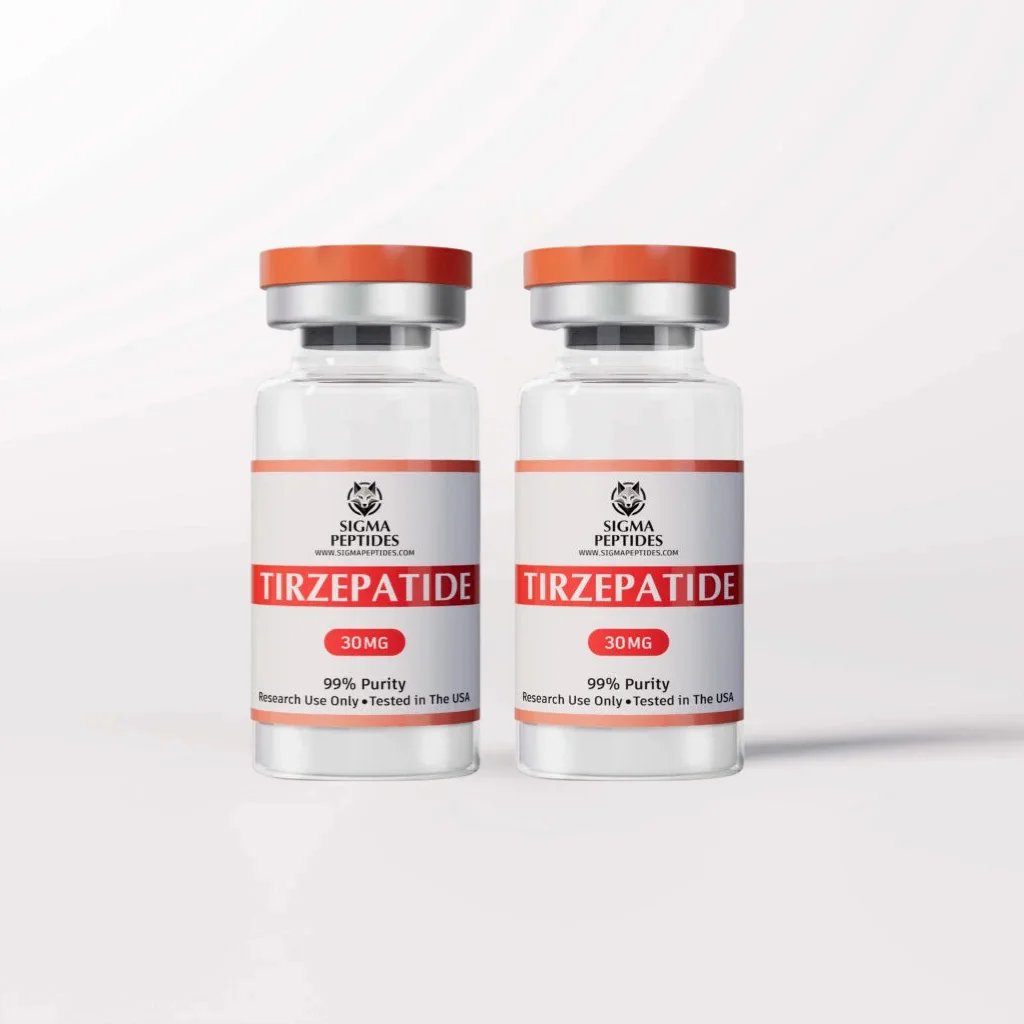
Tirzepatide 30mg*(2 Vials)
The Dual-Action Metabolic Catalyst
$360.00$280.00
Tirzepatide represents a major breakthrough in metabolic science as the first "twincretin"—a single molecule that activates two distinct primary incretin pathways: the Glucose-dependent Insulinotropic Polypeptide (GIP) and the Glucagon-Like Peptide-1 (GLP-1) receptors. While traditional metabolic peptides often target only the GLP-1 receptor, Tirzepatide’s dual-action approach allows it to engage a broader range of physiological processes simultaneously.
This 39-amino acid synthetic peptide is engineered with a specialized C20 fatty diacid moiety. This structural modification enables the peptide to bind to albumin, significantly extending its half-life to approximately five days and allowing for a consistent, long-acting effect in research protocols. By mimicking these natural gut hormones, Tirzepatide provides a sophisticated method for regulating energy balance, appetite, and glucose homeostasis.
Core Benefits to the Body
Tirzepatide is recognized for its multifaceted impact on the human metabolic system, offering benefits that extend across multiple organ groups:
Optimized Glucose Management: It stimulates the pancreas to release insulin in a glucose-dependent manner, primarily after meals, while simultaneously suppressing inappropriate glucagon secretion from the liver.
Profound Appetite Regulation: By targeting receptors in the brain's hypothalamus, it helps reduce "food noise," lowers overall caloric intake, and enhances the feeling of satiety.
Digestive Efficiency: It slows the rate of gastric emptying, which helps prevent sharp post-meal blood sugar spikes and maintains a prolonged sense of fullness.
Cardiovascular and Lipid Support: Research indicates potential improvements in heart health markers, including reduced systolic blood pressure and enhanced lipid metabolism.
Liver Health Integration: Evidence suggests it may aid in reducing liver fat and improving markers for metabolic dysfunction-associated steatohepatitis (MASH).
Enhanced Insulin Sensitivity: Unlike single-agonist peptides, Tirzepatide has been shown to improve peripheral insulin sensitivity in muscle and adipose tissue.
Technical Specifications & Dosing Guidance
In clinical and research environments, Tirzepatide is typically introduced gradually to minimize gastrointestinal sensitivities and maximize therapeutic outcomes.
Feature | Specification |
Peptide Type | Dual GIP/GLP-1 Receptor Agonist |
Molecular Structure | 39-amino acid backbone with C20 fatty diacid |
Bioavailability | Approximately 80% |
Elimination Half-Life | ~5 Days |
Standard Starting Dose | 2.5 mg once weekly for 4 weeks |
Escalation Protocol | Increase by 2.5 mg every 4 weeks as tolerated |
Maximum Maintenance Dose | 15 mg once weekly |
Storage and Handling Instructions
To preserve the delicate chemical structure of this acylated peptide, strict adherence to storage protocols is required.
Unopened Lyophilized Vials: Should be stored in a refrigerator between 2°C and 8°C (36°F–46°F). For long-term preservation of the dry powder, storage at -20°C is preferred to prevent degradation over years.
Reconstituted Peptides: Once the peptide is mixed with a bacteriostatic agent, it must be kept refrigerated at 2°C to 8°C and should generally be used within 21 to 30 days.
Light Protection: Always store vials in their original carton or a dark container, as Tirzepatide is highly sensitive to UV light and direct sunlight.
Temperature Stability: While the peptide can remain stable at room temperature (up to 30°C/86°F) for up to 21 days, it should never be returned to the refrigerator once it has reached room temperature for an extended period.
Strict Precaution: Never freeze the reconstituted liquid solution, as extreme cold can permanently damage the peptide's effectiveness.
Important Educational Information
Tirzepatide is a powerful tool in metabolic research, but it requires careful administration. The most common observations during initial use include mild gastrointestinal effects such as nausea or indigestion, which often subside as the dose is titrated upward. It is critical to stay well-hydrated during use. Researchers should also be aware that weight loss achieved through this pathway often requires long-term maintenance, as discontinuation can lead to a reversal of the metabolic improvements and weight regain.