
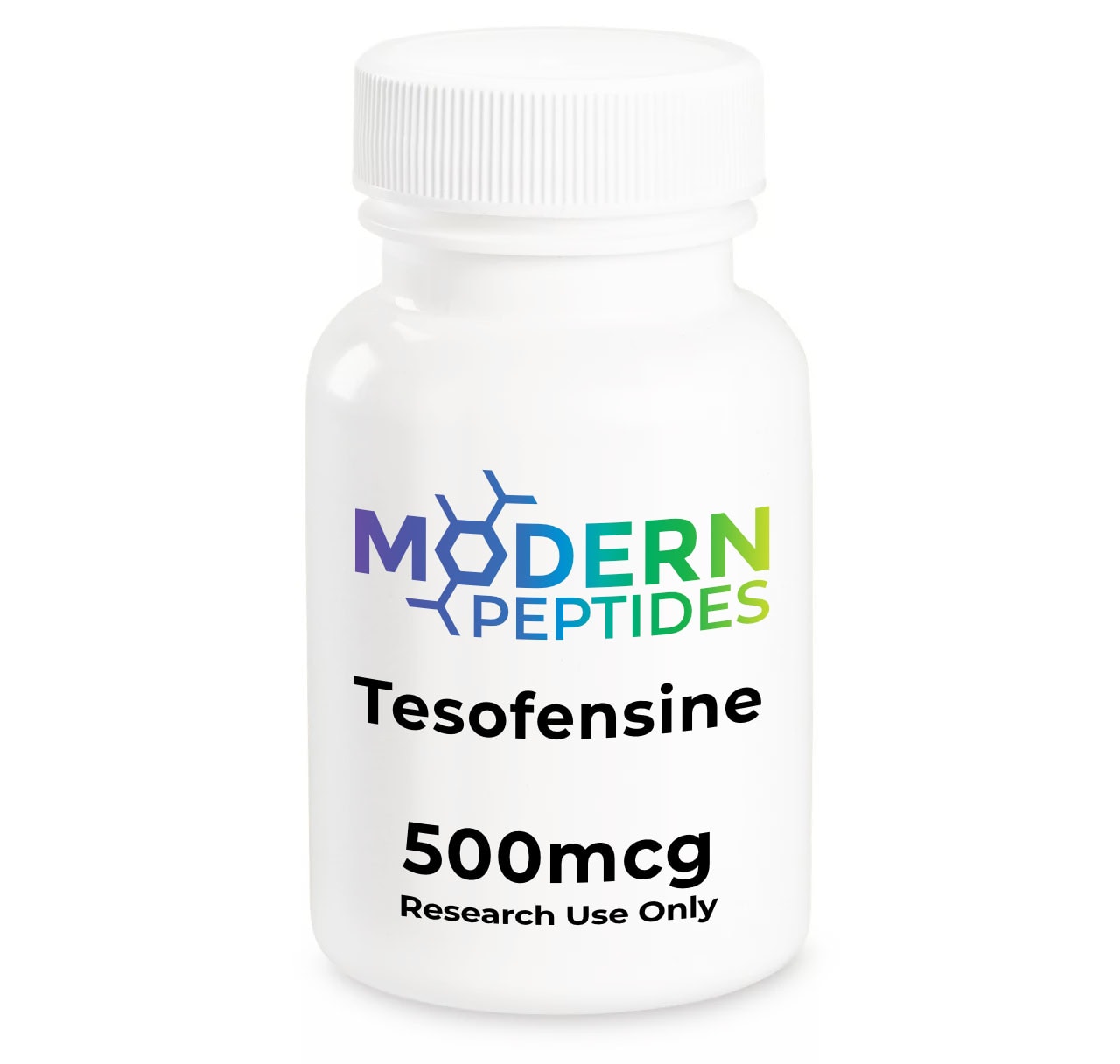
Tesofensine 500mcg (Modern Peptides)
Triple Monoamine Reuptake Inhibitor for Metabolic Research
$130.00$115.00
Tesofensine 500mcg (0.5mg) is a research compound classified as a triple monoamine reuptake inhibitor (TRI).1 It acts centrally in the brain to block the reabsorption of three key neurotransmitters: serotonin, noradrenaline, and dopamine.2
Originally developed by NeuroSearch for neurological conditions like Parkinson’s and Alzheimer’s, it is now primarily researched for its significant influence on appetite suppression and resting energy expenditure.3
Core Research Highlights
In clinical and laboratory settings, Tesofensine 500mcg is investigated for:
Appetite Suppression: By modulating neurotransmitters in the hypothalamus (the brain's hunger center), it is studied for its ability to significantly reduce food cravings and increase satiety.4
Metabolic Rate Enhancement: Research suggests it may increase resting energy expenditure (basal metabolic rate) by approximately 6%, aiding in the modeling of weight loss interventions.
Neuroprotective Properties: Due to its dopamine-related mechanism, it is studied for potential beneficial effects on cognition, specifically in the areas of learning, memory, and focus.5
Body Recomposition: Unlike many weight-loss compounds, clinical data from Phase II trials (TIPO-1) indicated that weight loss with Tesofensine was primarily fat mass, with notable preservation of lean muscle tissue.6
Insulin Sensitivity: It is used in models to evaluate improvements in fasting glucose levels and lipid profiles.7
Technical Specifications
Feature | Specification |
Product Name | Tesofensine 500mcg (0.5mg) |
Class | Serotonin–Norepinephrine–Dopamine Reuptake Inhibitor (SNDRI) |
Half-Life | Extremely long; approximately 9 days (220 hours) |
Form | Typically supplied in capsule or tablet form for research |
Metabolism | Mainly metabolized by CYP3A4 to its metabolite M1 (NS2360) |
Preparation and Usage in Research
Research Dosage: The 0.5mg (500mcg) dose is frequently cited in clinical literature as the "sweet spot" for efficacy and tolerability.8
Cycle Management: Researchers often evaluate it over 24-week periods, noting that tolerance may begin to build after 4–6 weeks at higher doses.9
Stacking: In biochemical modeling, it is often researched alongside other compounds like BPC-157 or amino acids.10
Storage and Safety Guidelines
Storage: Should be stored in a cool, dry place away from direct sunlight to maintain chemical stability.
Commonly Observed Side Effects (in research models): Dry mouth, insomnia, headache, and minor increases in heart rate or blood pressure.
Safety Warning: This product is strictly for laboratory research use only.11 It is not intended for human consumption, medical treatment, or dietary supplement use. It must be handled only by qualified professionals in controlled laboratory conditions.12