
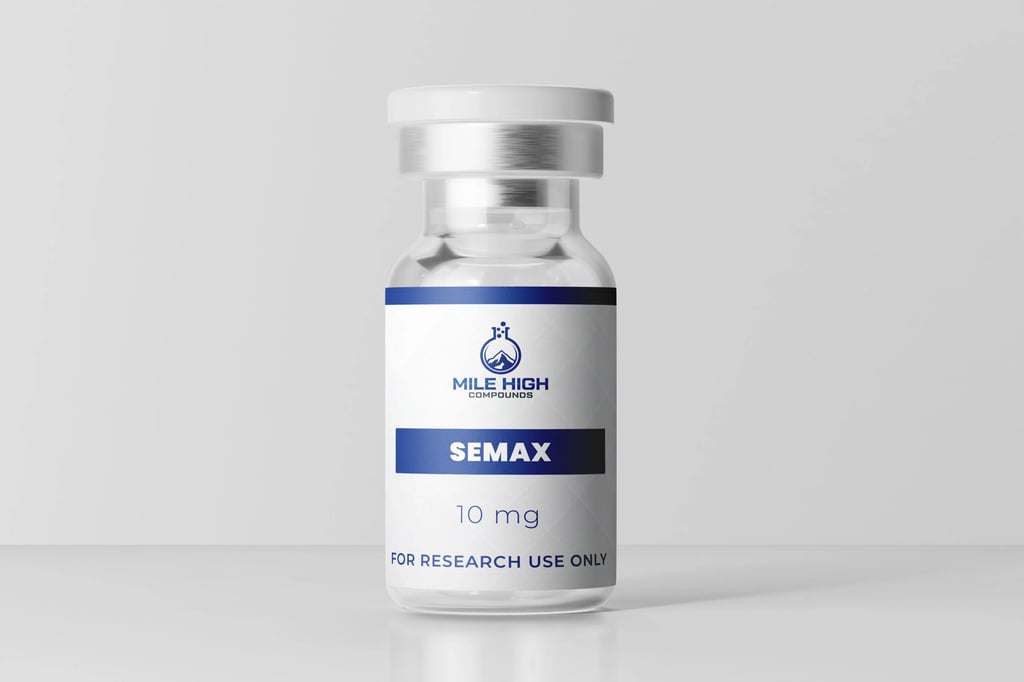
Semax
$45.00$35.00
Synthetic Heptapeptide for Neurological Research
Semax is a synthetic heptapeptide (Met-Glu-His-Phe-Pro-Gly-Pro) originally derived from a fragment of the adrenocorticotropic hormone (ACTH 4-10). It is primarily studied in laboratory settings for its potential to support brain health and cognitive function through its unique neurotrophic and neuroprotective properties.
Core Benefits & Research Focus
Semax is investigated for its influence on the central nervous system and its ability to modulate adaptive responses to stress:
Neurotrophic Factor Expression: Studied for its potential to influence the expression of Brain-Derived Neurotrophic Factor (BDNF), a key protein involved in the survival, growth, and maintenance of neurons.
Cognitive Enhancement: Research focuses on its impact on memory pathways and synaptic plasticity, which are critical for learning and cognitive performance.
Neuroprotection & Recovery: Evaluated for its neurorestorative properties, particularly in how the brain responds to and recovers from injury or chronic stress.
Neurotransmitter Modulation: Investigated for its role in regulating various neurotransmitter systems within the brain.
Technical Specifications
Feature | Specification |
Product Name | Semax |
Sequence | Met-Glu-His-Phe-Pro-Gly-Pro |
Quantity | 10mg |
Form | Lyophilized (freeze-dried) powder |
Solubility | Soluble in sterile water or research-compatible buffers |
Storage and Handling
In Powder Form: Should be stored dry in a cool, dark environment.
After Reconstitution: Once mixed with a solution, the compound must be refrigerated at 2°C–8°C to maintain stability.
Shelf Life: Lyophilized peptides typically remain stable for extended periods when kept frozen or refrigerated.
Safety and Intended Use
Usage Disclaimer: This product is intended exclusively For In Vitro Research Use Only. It is not for human or veterinary use.
Legal Note: The product is not intended to diagnose, treat, cure, or prevent any disease, and its use should be limited to qualified professionals in licensed laboratory environments.