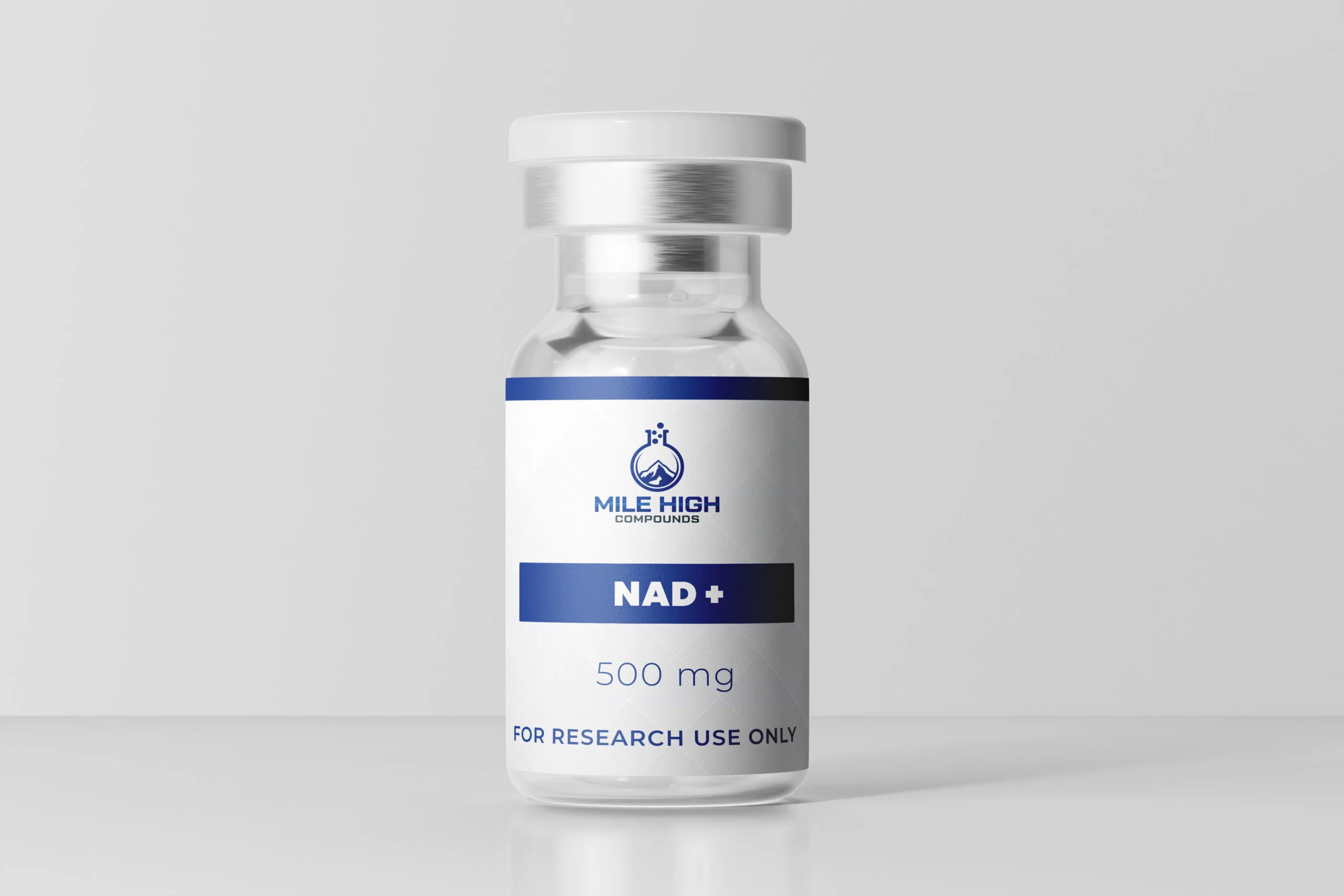
NAD+ 500mg
The Essential Coenzyme for Cellular Vitality
$35.00$25.00
Optimizing Mitochondrial Function and Bioenergetic Research
Nicotinamide Adenine Dinucleotide (NAD+) is a fundamental pyridine nucleotide coenzyme found in every living cell. It serves as a critical bridge in the body’s metabolic processes, acting as a primary electron carrier in redox reactions and a vital signaling molecule for cellular maintenance. In the landscape of biochemical research, NAD+ is recognized as the "master molecule" for its indispensable role in converting nutrients into cellular energy (ATP) through the electron transport chain.
This high-purity NAD+ 500mg formulation is provided in a lyophilized (freeze-dried) powder form to ensure maximum stability and chemical integrity. It is a cornerstone for laboratory studies investigating cellular aging, sirtuin activation, and the biological mechanisms of oxidative stress.
Core Benefits to the Body and Research Utility
NAD+ influences a vast array of physiological pathways, making it a primary focus for studies on longevity and metabolic health:
Cellular Bioenergetics: It is the central co-factor in mitochondrial oxidative phosphorylation, directly influencing the efficiency of energy production within the cell.
DNA Repair and Maintenance: NAD+ is a required substrate for PARP enzymes, which identify and repair damaged DNA strands to maintain genomic stability.
Sirtuin Activation: It acts as a key "fuel" for sirtuins (specifically SIRT1), a family of proteins that regulate cellular health, aging, and inflammatory responses.
Redox Balance: By facilitating the balance between NAD+ and its reduced form (NADH), it helps the body manage oxidative stress and cellular signaling.
Mitochondrial Dynamics: Research suggests that maintaining robust NAD+ levels supports the healthy turnover and function of mitochondria.
Technical Specifications
For precise laboratory protocols, the following chemical properties define this compound:
Feature | Specification |
Product Name | β-Nicotinamide adenine dinucleotide (NAD+) |
Purity | ≥ 98% (Lab-tested and verified) |
Molecular Formula | $C_{21}H_{27}N_{7}O_{14}P_{2}$ |
Molecular Weight | 663.43 g/mol |
CAS Number | 53-84-9 |
Appearance | White to off-white lyophilized powder |
Preparation and Dosage Information
This product is a lyophilized powder and requires reconstitution with a sterile diluent, such as Bacteriostatic Water, before application.
Reconstitution: Gently introduce the diluent into the vial, allowing it to flow down the side to avoid foaming. Swirl gently until the powder is fully dissolved.
Research Dosage: While dosage varies based on specific research goals, laboratory protocols for NAD+ often involve concentrations tailored to cellular metabolic flux or enzymatic kinetic studies.
Important Supplies: Conducting research with this compound requires additional laboratory supplies, including bacteriostatic water, sterile syringes, and alcohol prep pads for sanitizing vial stoppers.
Storage and Handling Guidelines
To maintain the potency and prevent the degradation of this sensitive coenzyme, strict environmental controls are necessary.
Unopened (Lyophilized): Store in a cool, dry place away from direct light and moisture. For long-term preservation and extended stability, refrigeration at 2°C to 8°C (36°F–46°F) is strongly recommended.
Environmental Caution: Do not freeze the product. Ensure the container remains tightly sealed when not in use to protect the hygroscopic powder from moisture.
Safety Standards: This compound is strictly for in-vitro laboratory research. All handling should be conducted by qualified professionals following institutional safety protocols and standard laboratory practices.
Educational Context for Researchers
NAD+ levels are known to decline naturally with age, making its replenishment a significant area of interest in modern life sciences. Researchers utilize this 500mg concentration to explore the "NAD+/NADH ratio," which serves as a vital biomarker for the metabolic state of a cell. This product is suitable for protocols involving mammalian cell cultures, yeast, or isolated organelles where NAD+ is used as a co-substrate or an experimental variable.
Contact us
© 2025. All rights reserved.
