
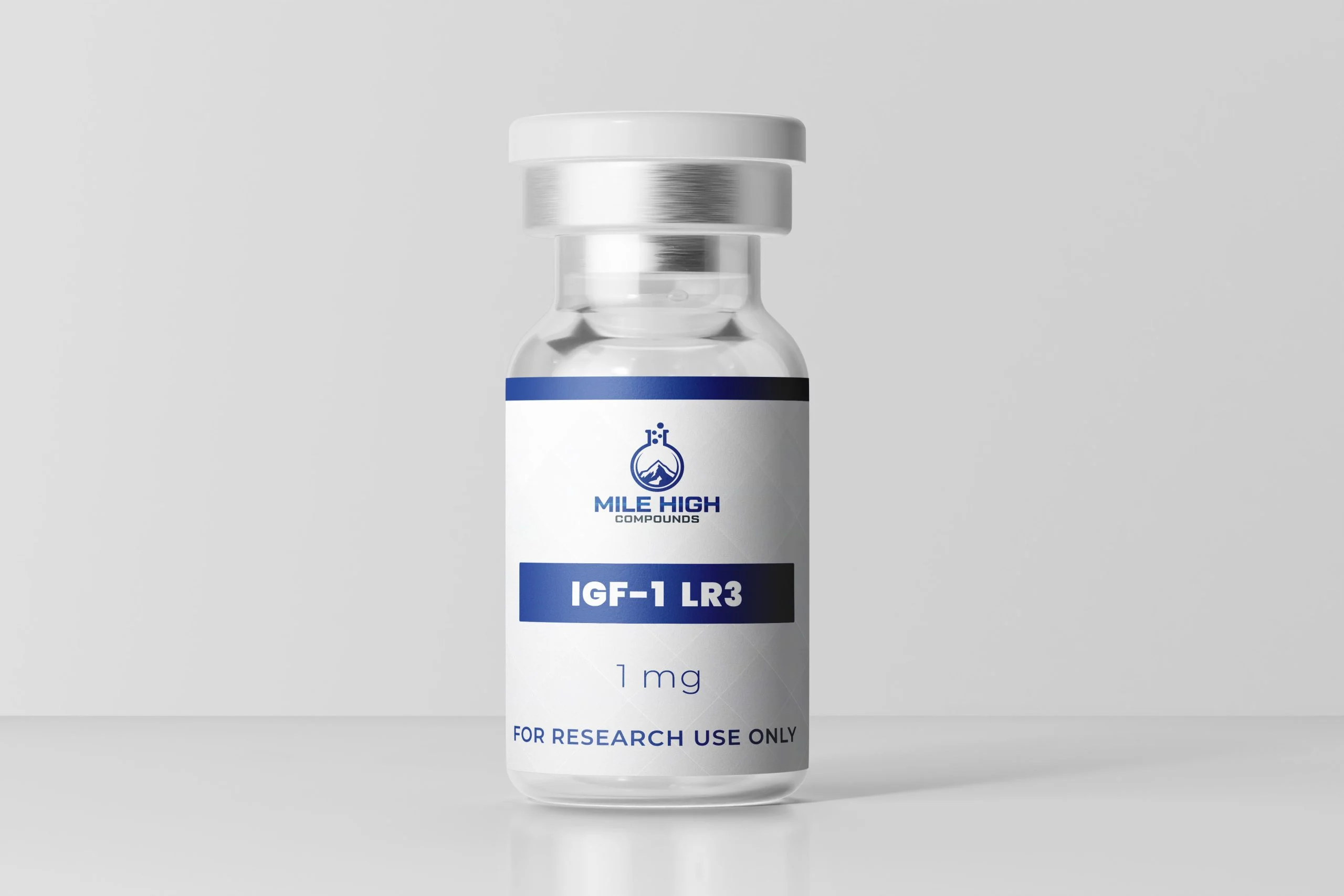
IGF-1 LR3 High-Potency
Synthetic Analog for Research & Tissue Growth
$79.99$54.99
IGF-1 LR3 (Long Arg3 Insulin-Like Growth Factor-1) is a synthetic analog of human IGF-1, specifically modified to be more stable and potent than the natural hormone.1 By substituting an arginine at the third position and adding a 13-amino acid extension, this peptide avoids binding to inhibitory proteins in the blood, allowing it to remain active in the body for 20–30 hours—significantly longer than the roughly 20-minute half-life of natural IGF-1.2
Core Benefits & Research Focus
IGF-1 LR3 is primarily investigated for its role in cellular proliferation and anabolic metabolism:
Muscle Hypertrophy: Stimulates skeletal muscle growth by improving insulin sensitivity and facilitating the uptake of amino acids and glucose into muscle cells.
Enhanced Fat Metabolism: Encourages the body to use stored fat for energy production instead of glucose, supporting fat loss and improved body composition.3
Tissue Repair & Recovery: Promotes angiogenesis (new blood vessel formation) and skin regeneration, which are critical for healing from injuries.
Neuroprotection: Researched for its potential to prevent neuronal loss and support cognitive function in aging models.
Bone Density: Plays a key role in bone formation by stimulating osteoblasts, which can help prevent bone loss in older age.4
Technical Specifications
Feature | Specification |
Product Name | IGF-1 LR3 (Long Arg3 Insulin-Like Growth Factor-1) |
Purity | More than 95% (as determined by SDS-PAGE) |
Quantity | 1 mg per vial |
Formulation | White lyophilized powder with mannitol stabilizer |
Biological Activity | ≥ 1×10⁶ Units/mg (determined by Bal B/C 3T3 cell assay) |
Source | Recombinant E. coli |
Storage and Handling
Reconstitution: It is recommended to reconstitute the lyophilized powder at a concentration of 100-200µg/ml using sterile water or an aqueous buffer.5
Shelf Life: Can be stored at -20°C for up to 36 months in powder form.6
After Opening: Once reconstituted, use as soon as possible and avoid repeated freeze-thaw cycles, as this can degrade the peptide.7
Safety and Side Effects
Side Effects: Reported effects in research models include muscle and joint pain, nausea, headaches, and hypoglycemia (low blood sugar), particularly at high doses.8
Long-Term Risks: Chronic high levels of IGF-1 are associated with heart damage, joint problems, and an increased risk of promoting the growth of certain cancers by inhibiting programmed cell death (apoptosis).9
Usage Disclaimer: This product is intended For In Vitro Research Use Only. It is not intended for human or veterinary use.
Banned Status: IGF-1 and its analogs are banned by many sporting regulatory agencies (WADA) as performance-enhancing drugs.10