
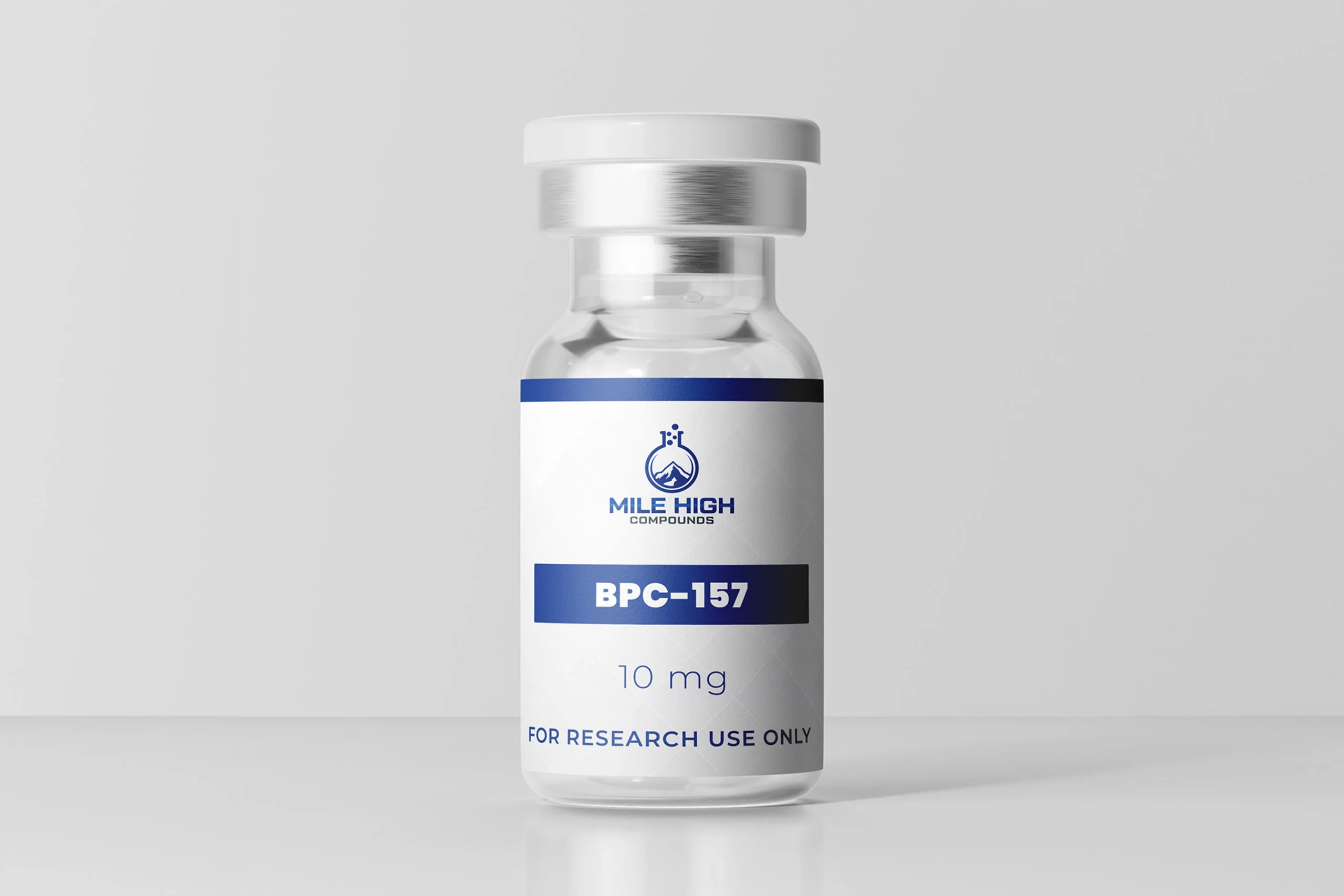
BPC-157 (Body Protective Compound)
Advanced Regenerative Peptide for Tissue Repair and Systemic Recovery
$49.99$34.99
BPC-157 is a synthetic peptide consisting of 15 amino acids, derived from a protective protein naturally occurring in human gastric juice. It belongs to the class of "cytoprotective" compounds, which are characterized by their ability to protect and heal cellular structures within the body. In the field of regenerative science, BPC-157 is highly regarded for its unique ability to accelerate the healing of various tissues, including tendons, muscles, ligaments, and the gastrointestinal tract.
Unlike standard anti-inflammatory medications that merely suppress symptoms, BPC-157 is believed to trigger the body’s internal repair mechanisms. It facilitates "angiogenesis"—the formation of new blood vessels—which is a critical step in the recovery process, ensuring that damaged tissues receive the oxygen and nutrients required for structural restoration. This peptide is a cornerstone for those seeking to enhance recovery from physical injury or to address chronic inflammatory conditions within the gut and musculoskeletal system.
Primary Benefits to the Body
The biological impact of BPC-157 extends across several physiological systems to promote rapid healing and structural integrity:
Connective Tissue Repair: It significantly accelerates the healing of tendons and ligaments by promoting the outgrowth of fibroblasts and increasing the expression of growth factor receptors. Muscle Regeneration: BPC-157 assists in the recovery of torn or damaged muscle fibers, helping to restore functional strength more efficiently after strenuous exercise or trauma. Gastrointestinal Healing: Due to its origins in the stomach, it is highly effective at repairing the intestinal lining, making it a valuable tool for addressing "leaky gut," ulcers, and inflammatory bowel diseases. Systemic Anti-Inflammatory Effects: It helps modulate the body's inflammatory response, reducing localized swelling and discomfort without the gastrointestinal side effects associated with traditional pain relievers. Vascular Health: By promoting the formation of new blood vessels, it ensures better blood flow to areas that traditionally have poor circulation, such as joints and tendons. Neurological Support: Emerging research suggests BPC-157 may have neuroprotective properties, supporting the repair of nerve tissues and promoting cognitive health.
Normal Dosage and Administration
BPC-157 is typically administered via subcutaneous injection. While it has a systemic effect (meaning it travels through the bloodstream to find areas of damage), many protocols involve injecting it near the site of injury for localized support.
Standard Dosage Guidelines:
General Recovery and Gut Health: 250 mcg to 500 mcg once daily. Intensive Injury Repair: 500 mcg to 1,000 mcg per day (often split into two doses: morning and evening). Cycle Duration: Typically used for a cycle of 4 to 12 weeks, followed by a break of at least 4 weeks.
Administration Protocol:
Reconstitution: If the product is in a lyophilized (powder) state, it must be mixed with Bacteriostatic Water.
Mixing: Slowly trickle the water down the side of the vial. Do not shake the vial, as this can damage the delicate peptide structure; instead, gently swirl until the liquid is clear.
Injection: Using a small-gauge needle, inject into the fatty tissue (subcutaneously) of the abdomen or near the injured area.
Timing: The peptide can be administered at any time of day, with or without food.
Safe Storage and Handling
Maintaining the stability of the peptide chain is essential for its effectiveness.
Refrigeration (Required): Once reconstituted, the vial must be stored in the refrigerator at temperatures between 2°C and 8°C (36°F to 46°F). Protection from Light: Keep the vial in a dark place or in its original packaging to prevent degradation from UV exposure. Avoid Freezing: Never freeze the peptide after it has been mixed. If the solution freezes, the molecular structure will be compromised and it should be discarded. Pre-Reconstitution: Unopened, dry vials can be stored at room temperature for short periods, but for long-term stability, they should be kept in the refrigerator or freezer.
Important Educational Information
Understanding the regenerative nature of BPC-157 is key to maximizing its benefits.
Systemic vs. Localized Action A common question is whether the injection must be at the site of the injury. While BPC-157 is systemic and will eventually reach the target area through the blood, many researchers prefer localized injections for joint and tendon issues to ensure a higher concentration of the peptide reaches the damaged tissue quickly.
The BPC-157 and TB-500 Synergy BPC-157 is frequently "stacked" with another peptide called TB-500. While BPC-157 focuses on the structural repair of the injury site and blood vessel growth, TB-500 focuses on cell migration and reducing acute inflammation. Together, they offer a more comprehensive approach to total body recovery.
Potential Side Effects BPC-157 is generally well-tolerated with very few reported side effects. Some users may experience:
Mild redness or itching at the injection site.
Slight changes in bowel habits (due to its activity in the gut).
Occasional dizziness or "head rush" immediately after injection.
Peptide Recovery Comparison Table
Feature: BPC-157 Primary Focus: Tendons, Ligaments, & Gut Action: New blood vessel growth (Angiogenesis) Best For: Chronic injuries & Digestive repair
Feature: TB-500 Primary Focus: Muscle & Acute Inflammation Action: Cell migration & Actin regulation Best For: Large muscle tears & Flexibility
Feature: Collagen Primary Focus: Skin & Joints Action: Providing structural building blocks Best For: General maintenance & Skin health