
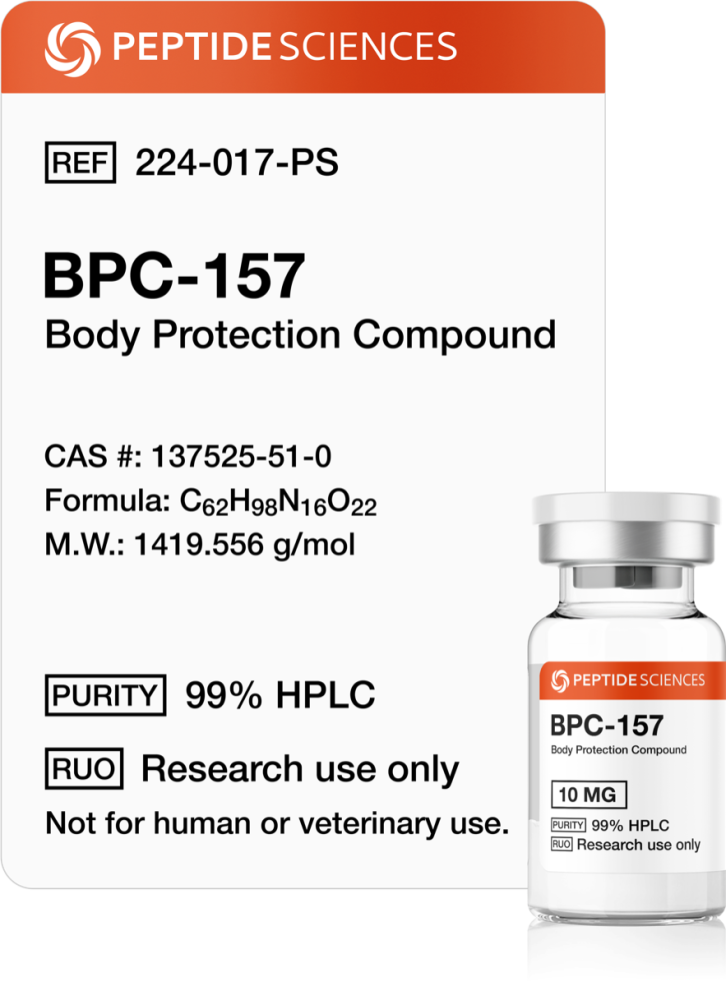
BPC-157 10mg (Body Protective Compound)
Advanced Regenerative Peptide for Tissue Repair and Recovery
$105.00$75.00
BPC-157, or Body Protective Compound-157, is a synthetic peptide consisting of 15 amino acids. It is derived from a protective protein found naturally in human gastric juice. Renowned in the field of regenerative medicine, BPC-157 is primarily recognized for its potent "cytoprotective" activity, meaning it helps protect and heal cells within the body. Unlike many compounds that merely mask pain or reduce surface-level inflammation, BPC-157 is thought to trigger the actual repair of damaged tissues by accelerating the body's natural healing processes.
This 10mg formulation is highly sought after for its ability to promote the healing of various tissues, including muscles, tendons, ligaments, and the gastrointestinal tract. By stimulating the expression of growth factor receptors and promoting "angiogenesis"—the formation of new blood vessels—it ensures that damaged areas receive the oxygen and nutrients necessary for rapid recovery.
Primary Benefits to the Body
The biological impact of BPC-157 is wide-ranging, focusing heavily on structural integrity and internal mucosal health:
Tendon and Ligament Healing: BPC-157 promotes the outgrowth of tendon fibroblasts and increases the expression of growth hormone receptors, which is essential for repairing dense connective tissues that typically have poor blood supply. Muscle Regeneration: It has shown significant efficacy in accelerating the recovery of crushed or torn muscle tissue, helping to restore strength and function more quickly. Gastrointestinal Health: True to its origins in the stomach, BPC-157 helps repair the gut lining and is often studied for its ability to combat "leaky gut," inflammatory bowel disease (IBD), and stomach ulcers. Anti-Inflammatory Properties: While it is not a traditional NSAID, BPC-157 exerts systemic anti-inflammatory effects that help reduce swelling and discomfort without the negative side effects on the liver or stomach. Bone Repair: Preliminary research indicates that it can enhance the healing of bone segments and increase the rate of bone mineral density recovery after injury. Nitric Oxide Regulation: It helps regulate blood pressure and protects blood vessels by modulating nitric oxide production, which aids in overall cardiovascular health during recovery.
Normal Dosage and Administration
BPC-157 is versatile in its administration, though it is most commonly administered via subcutaneous injection near the site of injury for localized issues, or anywhere in the fatty tissue for systemic benefits.
Standard Dosage Guidelines:
General Maintenance/Recovery: 250 mcg to 500 mcg per day. Intensive Repair: Up to 1,000 mcg per day, often split into two 500 mcg doses (morning and evening). Cycle Duration: Typically used for a cycle of 4 to 12 weeks, followed by a break period.
Administration Instructions:
Reconstitution: This product usually arrives as a lyophilized (freeze-dried) powder. It must be reconstituted with Bacteriostatic Water.
Mixing: Slowly inject the water into the vial and let it dissolve naturally. Do not shake the vial, as this can damage the delicate peptide structure.
Injection: Using a fine-gauge needle, inject the solution into the subcutaneous fat (typically the abdomen) or near the injured area as directed by a protocol.
How to Store
Proper storage is critical for maintaining the stability of the 15-amino acid chain.
Pre-Reconstitution (Powder): Store the dry vial in a cool, dark place. For long-term stability, it is best kept in the freezer at -20°C, where it can remain stable for up to 24 months. Post-Reconstitution (Liquid): Once mixed, the vial must be stored in the refrigerator between 2°C and 8°C (36°F to 46°F). Light and Movement: Keep the vial away from direct sunlight and avoid excessive agitation. Shelf Life after Mixing: It is recommended to use the reconstituted peptide within 3 to 4 weeks for maximum potency.
Important Educational Information
Understanding the regenerative nature of BPC-157 is essential for proper use.
Systemic vs. Localized Action While many users inject BPC-157 close to an injury (like a knee or elbow), the peptide has a systemic effect. This means that even if injected in the abdomen, it will travel through the bloodstream to find areas of inflammation or damage that need repair.
The "Arg" vs. "Ace" Versions There are two common forms: BPC-157 Arginate and BPC-157 Acetate. The Arginate salt version is generally more stable at room temperature and more resistant to degradation in the stomach, making it the preferred choice for oral applications, while the Acetate version is standard for injections.
Interaction with Other Peptides BPC-157 is frequently "stacked" with another peptide called TB-500. While BPC-157 focuses on the site of the injury and building new blood vessels, TB-500 focuses on cell migration and reducing acute inflammation, creating a powerful synergy for recovery.
Peptide Comparison Table
Feature: BPC-157 Primary Function: Tissue & Gut Repair Mechanism: Angiogenesis & Growth Factor Expression Best For: Tendons, Ligaments, Gut Lining
Feature: TB-500 (Thymosin Beta-4) Primary Function: Cell Migration & Flexibility Mechanism: Actin Sequestration Best For: Large Muscle Tears, Acute Inflammation
Feature: Collagen Peptides Primary Function: Structural Building Blocks Mechanism: Providing Amino Acids Best For: General Skin, Hair, and Joint Support