
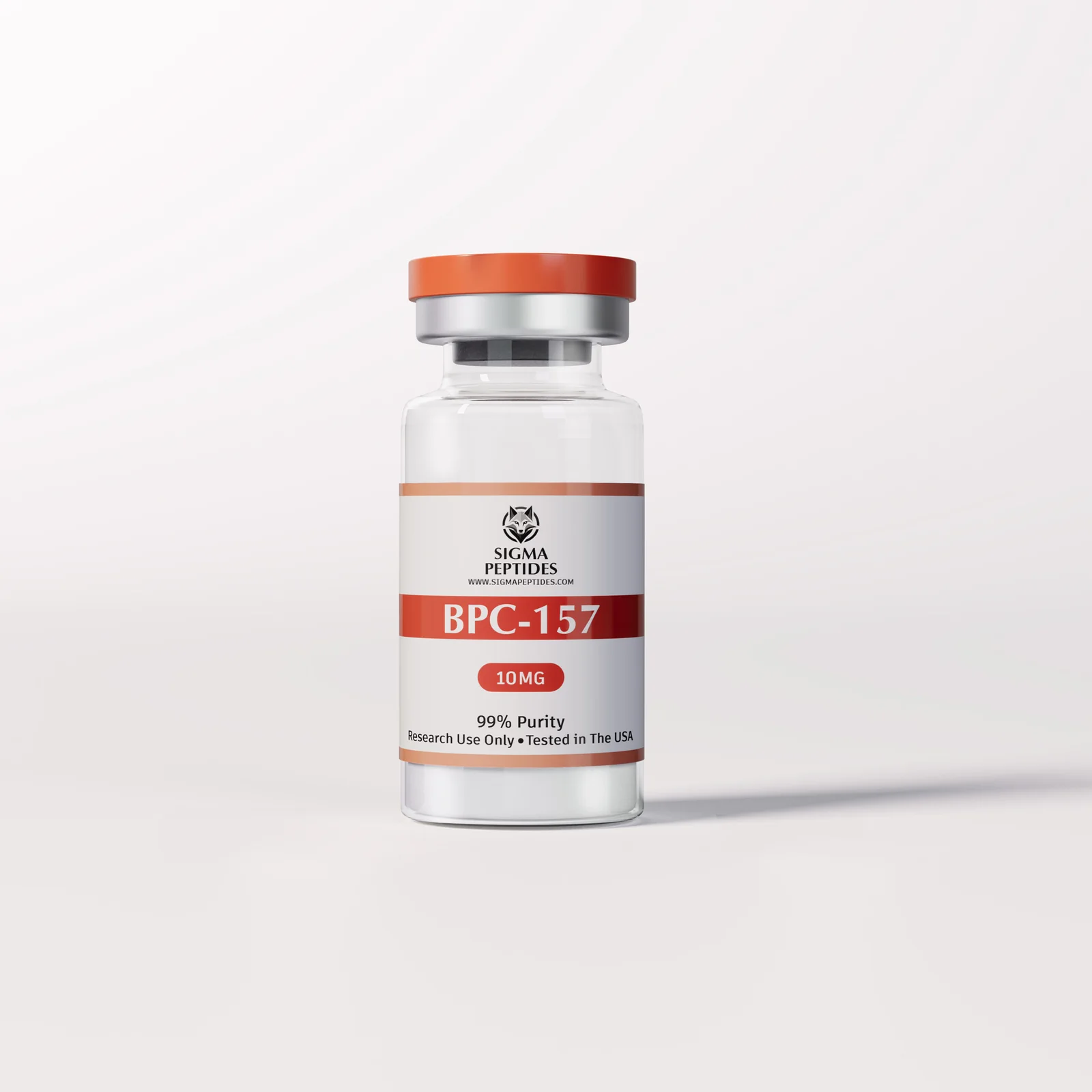
BPC-157 10mg
Optimizing Tissue Response and Vascular Research
$55.00$35.00
BPC-157 (Body Protection Compound-157) is a synthetic pentadecapeptide derived from a protein naturally occurring in gastric juice. It is highly regarded in preclinical research for its unique ability to modulate cellular signaling pathways involved in tissue repair and systemic regeneration.
This high-purity formulation is designed for laboratory environments investigating the complex dynamics of cell migration, vascular formation, and the structural integrity of connective tissues. Unlike many other peptides, BPC-157 is studied for its stability and effectiveness across various experimental models, making it a cornerstone for studies on healing and microvascular growth.
Core Benefits to the Body and Research Utility
In laboratory studies, BPC-157 is primarily utilized to examine its profound impact on biological recovery and cellular health:
Accelerated Tissue Modeling: Research focuses on its role in stimulating fibroblast migration and extracellular matrix interactions, which are critical for the repair of tendons, ligaments, and muscle tissue.
Vascular Modulation (Angiogenesis): It is a key subject in studies examining the formation of new blood vessels, aiding in research on microvascular growth and improved nutrient delivery to damaged sites.
Gastrointestinal Protection: Derived from gastric proteins, it is frequently used to model the defense and repair mechanisms of the intestinal lining.
Inflammatory Response Studies: Scientists utilize BPC-157 to investigate peptide-regulated pathways that manage oxidative stress and cellular survival under challenging conditions.
Systemic Regenerative Dynamics: It offers insights into tissue remodeling without directly altering standard proliferation markers, allowing for precise study of regenerative signaling.
Technical Specifications
For rigorous scientific protocols, the following chemical properties define this compound:
Feature | Specification |
Product Name | BPC-157 10mg |
Purity | 99%+ (Lab-tested and third-party verified) |
Sequence | Gly-Glu-Pro-Pro-Pro-Gly-Lys-Pro-Ala-Asp-Asp-Ala-Gly-Leu-Val |
Molecular Formula | $C_{62}H_{98}N_{16}O_{22}$ |
Molecular Weight | 1419.556 g/mol |
CAS Number | 137525-51-0 |
Preparation and Dosage Information
This product is provided as a lyophilized (freeze-dried) powder and requires reconstitution prior to use.
Reconstitution: Must be mixed with Bacteriostatic Water. Introduce the diluent slowly down the side of the vial to prevent the mechanical degradation of the peptide.
Research Dosage: While dosage depends on the specific animal model or cell culture being studied, laboratory protocols often range from 250 mcg to 500 mcg per day in regenerative models.
Required Supplies: Additional supplies such as sterile syringes, alcohol prep pads, and a stable diluent are necessary for proper handling.
Storage and Handling Guidelines
To maintain the structural integrity of the pentadecapeptide chain, strict storage conditions must be followed:
Lyophilized (Dry): Store at 39°F (4°C) for up to 2 years, or at -4°F (-20°C) for up to 3 years for maximum long-term stability.
Reconstituted (Liquid): Once in a liquid state, the peptide must be kept refrigerated at 2°C to 8°C (36°F–46°F) and should be used within 21–28 days to ensure potency.
Safety Warning: This compound is strictly for in-vitro laboratory research and is not approved for human or animal consumption.
Educational Context for Researchers
BPC-157 is unique because it demonstrates "organo-protective" properties in research, often showing effectiveness even when administered away from the specific site of injury. This systemic signaling capability makes it a vital tool for researchers exploring how peptides can coordinate complex healing responses across multiple biological systems.