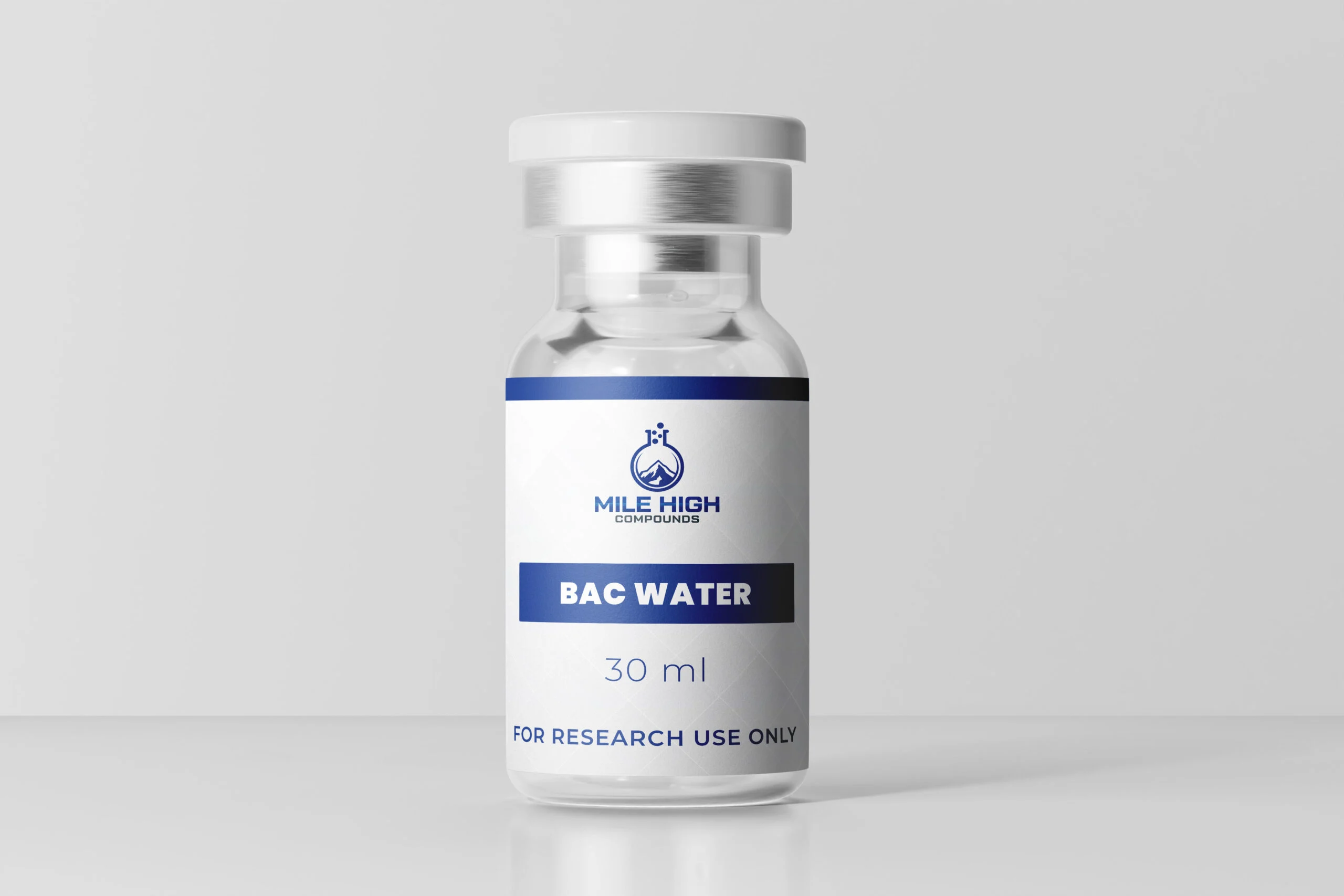
Bacteriostatic Water for Injection 30ml
Essential Diluent for Sterile Peptide Reconstitution and Stability
$29.99$19.99
Bacteriostatic Water for Injection is a sterile, non-pyrogenic preparation of water containing 0.9% (9 mg/mL) of benzyl alcohol added as a bacteriostatic preservative. This specific formulation is the industry standard for the reconstitution of lyophilized (freeze-dried) peptides and medications intended for multi-dose use. Unlike sterile water, which must be discarded immediately after a single use, the addition of benzyl alcohol in bacteriostatic water inhibits the growth of most potentially contaminating bacteria, allowing the solution to be entered multiple times (up to 28 days) when handled with proper aseptic technique.
The 30ml volume is designed for those managing multiple research protocols or long-term therapeutic cycles, providing an ample supply for the precision dilution of various peptides. It ensures that the delicate molecular structure of the peptide remains stable and sterile throughout the duration of its use.
Primary Benefits to the Body
While bacteriostatic water is a carrier agent rather than a primary active supplement, its role in maintaining physiological safety is critical:
Inhibition of Bacterial Growth: The 0.9% benzyl alcohol serves as a preservative that prevents the proliferation of bacteria that could otherwise be introduced during repeated vial entries. Aseptic Integrity: It provides a sterile medium that matches the body's requirements for subcutaneous or intramuscular administration, reducing the risk of localized infections or abscesses. Peptide Stability: Properly formulated bacteriostatic water maintains the pH balance necessary to keep complex peptide chains from denaturing or breaking down prematurely. Multi-Dose Efficiency: It allows for the safe storage of reconstituted medications in the refrigerator for several weeks, which is essential for once-weekly or daily peptide protocols.
Normal Usage and Administration
Bacteriostatic water is used to turn powdered peptides into a liquid solution. The amount of water used depends on the desired concentration for the specific peptide being reconstituted.
Standard Reconstitution Procedure:
Preparation: Clean the rubber stoppers of both the bacteriostatic water vial and the peptide vial with an alcohol swab.
Extraction: Draw the required amount of water into a sterile syringe. (Commonly 1ml, 2ml, or 3ml depending on the peptide concentration needed).
Dilution: Aim the needle at the side of the peptide vial wall. Inject the water slowly; do not spray the water directly onto the powder, as this can damage the peptide.
Dissolving: Gently swirl the vial until the powder is completely dissolved and the liquid is clear. Never shake the vial.
Concentration Reference Table:
Peptide Vial Size: 5 mg BAC Water Added: 1 ml Resulting Dose: 500 mcg per 0.1 ml (10 units)
Peptide Vial Size: 5 mg BAC Water Added: 2 ml Resulting Dose: 250 mcg per 0.1 ml (10 units)
Peptide Vial Size: 10 mg BAC Water Added: 2 ml Resulting Dose: 500 mcg per 0.1 ml (10 units)
Safe Storage and Handling
Proper storage of bacteriostatic water ensures the preservative remains effective and the water remains sterile.
Pre-Opening: Store at room temperature (20°C to 25°C or 68°F to 77°F) in a dry place away from direct sunlight. Post-Opening: Once the vial has been punctured, it must be used within 28 days. Any remaining liquid after 28 days should be discarded to ensure sterility. Temperature Limits: Do not freeze. Exposure to extreme cold can compromise the preservative and the integrity of the glass vial. Visual Inspection: Before use, check the vial for any particulate matter or discoloration. The solution should be completely clear.
Important Educational Information
Understanding the difference between various types of water is vital for safe administration.
Bacteriostatic Water vs. Sterile Water Sterile water for injection does not contain any preservatives. Once a vial of sterile water is opened, it must be used once and then discarded. If you use sterile water to mix a peptide and store it in the fridge for a week, bacteria may grow in the vial. Bacteriostatic water is the only appropriate choice for multi-dose vials.
Benzyl Alcohol Sensitivity While 0.9% benzyl alcohol is safe for the vast majority of users, a very small percentage of individuals may have a sensitivity to it, which can cause minor redness or irritation at the injection site. If significant irritation occurs, consult a healthcare professional.
Safety Note: Neonates Bacteriostatic water containing benzyl alcohol is contraindicated for use in newborns and infants, as their systems cannot properly process the preservative. It is strictly intended for adult use or research purposes.
Comparison of Common Diluents
Diluent Type: Bacteriostatic Water Preservative: 0.9% Benzyl Alcohol Shelf Life (Opened): 28 Days Usage: Multi-dose peptide vials
Diluent Type: Sterile Water Preservative: None Shelf Life (Opened): Single Use Only Usage: Immediate injection
Diluent Type: Bacteriostatic Sodium Chloride Preservative: Benzyl Alcohol + Salt Shelf Life (Opened): 28 Days Usage: Specific medications requiring saline
Would you like me to enhance another product description for you?